HSC · OISMUN XIX

The Historical Security Council

The Historical Security Council revisits crises that came before the UN Security Council. Delegates represent the Council’s members as they stood at the time, debate with only the information available on the committee’s starting date, and try to negotiate a better outcome than history produced, discovering how every decision shaped the world that followed.

Topics & guides

Topic 1

The Cuban Missile Crisis

In October 1962, American U-2 reconnaissance flights revealed that the Soviet Union was building launch sites in Cuba for nuclear-capable ballistic missiles able to reach much of the continental United States. On 22 October, President John F. Kennedy announced a naval “quarantine” of Cuba to stop further Soviet military shipments and demanded the removal of the missiles. The Soviet Union rejected the legality of the blockade, insisting that Cuba, a sovereign state, had the right to accept military assistance for its defence after the 1961 Bay of Pigs invasion, and pointed to the American Jupiter missiles deployed in Turkey and Italy.

The crisis came before the Security Council from 23 October 1962. On 25 October, United States Ambassador Adlai Stevenson presented aerial photographs of the sites in a direct confrontation with Soviet Ambassador Valerian Zorin, while Acting Secretary-General U Thant appealed to both sides to avoid confrontation. US strategic forces were placed at DEFCON 2, the highest level of readiness short of nuclear war. Delegates must work, under the threat of nuclear war, to defuse the crisis: verifying and dismantling the missile sites, guaranteeing Cuba’s security and preventing an incident at sea. (Historically, the crisis was resolved on 28 October with the withdrawal of the Soviet missiles in exchange for a US pledge not to invade Cuba and a private undertaking to remove the Jupiter missiles from Turkey.)

Topic 2

The UNSC on operation Iraqi freedom leading to the destabilization of Iraq

After Iraq’s 1990 invasion of Kuwait and the Gulf War, Security Council resolution 687 (1991) required Iraq to eliminate its weapons of mass destruction and long-range missiles under international inspection, while comprehensive sanctions remained in place. Inspections were interrupted in 1998, and doubts about what remained of Iraq’s programmes persisted. In November 2002, the Council unanimously adopted resolution 1441, which found Iraq in material breach of its obligations, gave it a final opportunity to comply, required a full declaration of its programmes and warned of “serious consequences” for continued violations. Inspectors from UNMOVIC and the International Atomic Energy Agency (IAEA) returned to Iraq.

In their briefings to the Council in early 2003, the IAEA reported no evidence of a revived nuclear weapons programme, while UNMOVIC reported that important disarmament questions remained unresolved, found that the Al Samoud 2 missile exceeded the permitted range, and described Iraq’s cooperation as improving but incomplete. Council members were deeply divided: the United States and the United Kingdom argued that Iraq had failed to disarm, while France, Germany, Russia and others insisted that inspections should continue and that any use of force required a further decision by the Council. Delegates must decide how to respond before military action begins. (Historically, a US-led coalition invaded Iraq on 20 March 2003 without a new resolution; the Iraq Survey Group later found no stockpiles of weapons of mass destruction, and the war was followed by years of instability.)


Chairs · Présidence

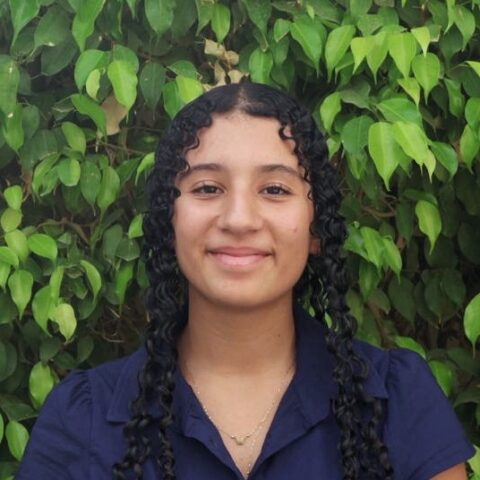
  • Habiba Ghonem President
  • Dalida Samih Vice-President

About the committee

In the Historical Security Council, the clock is set back to a precise moment. Delegates research their country’s policies, alliances and interests at that date, rather than its positions today, and respond to events as they unfold in committee. The rules and powers are those of the Security Council, including the veto of the five permanent members.

Events after the committee’s starting point have not yet happened in the simulation, so delegates may change history through their resolutions. Studying what actually followed, and why earlier resolutions succeeded or failed, helps delegates understand the consequences of each choice and look for decisions that could have led to a better outcome.

Other committees

ICJ

The International Court of Justice

The principal judicial organ of the United Nations, settling legal disputes between states under international law.

Zeina Amr & Laila Ebeid
GA

The General Assembly

The main deliberative body of the United Nations, where all 193 Member States have an equal vote.

Yassin Ramy & Alia Kadry
UNSC

The Security Council

The UN organ with primary responsibility for international peace and security, whose decisions all Member States must carry out.

Leyla Makouk & Fatima Essam

All committees